Looking Back at 2025
By Sheila S. Blanchette, IAABC-CPBC, UW-AAB
Happy New Year. As the new year begins, I look back on 2025 as a wonderful year of learning and understanding.
2025 Education Program Look Back:
Many individuals attended the 2025 Rhode Island Parrot Rescue Educational Series: Understanding Behavior and Preparing for an Avian Veterinary Exam. The Question-and-Answer sessions after each session were so much fun. The wonderful questions helped individuals understand that a particular behavior is learned by the companion bird, rather than being a trait of the entire species.
I was very fortunate to be connected to other wonderful professional certified companion bird behavior trainers. Our ethics and values align in sharing and educating the public about different approaches on working/training their individual companion bird(s). November’s Education Day was a huge success.
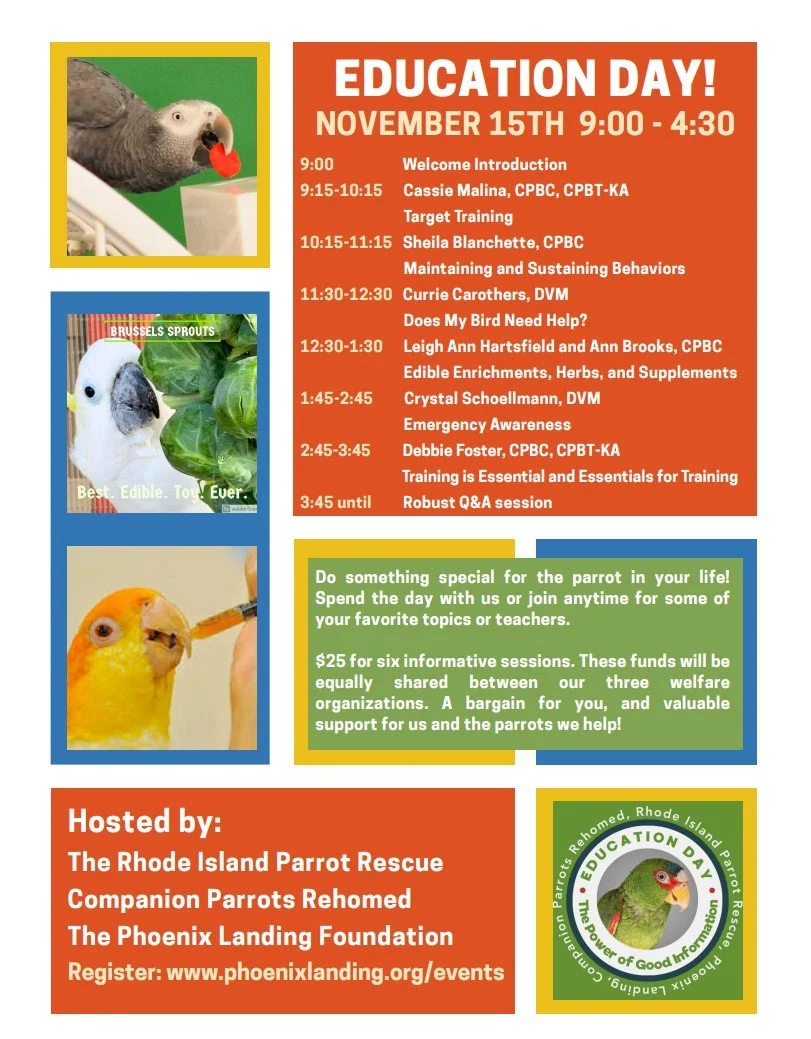
The attendees' feedback was so positive that all the speakers agreed to host this online event again next year. As a certified professional bird behavior trainer, I am committed to continuous learning. I have been participating in more courses on Applied Behavior Analysis, Advanced Animal Training, and Professional Services to enhance my skills. As I progress professionally, I fully understand the importance of supporting others. I am also planning more Rhode Island Parrot Rescue Online sessions and workshops for 2026.
2025 Enrichment Look Back:
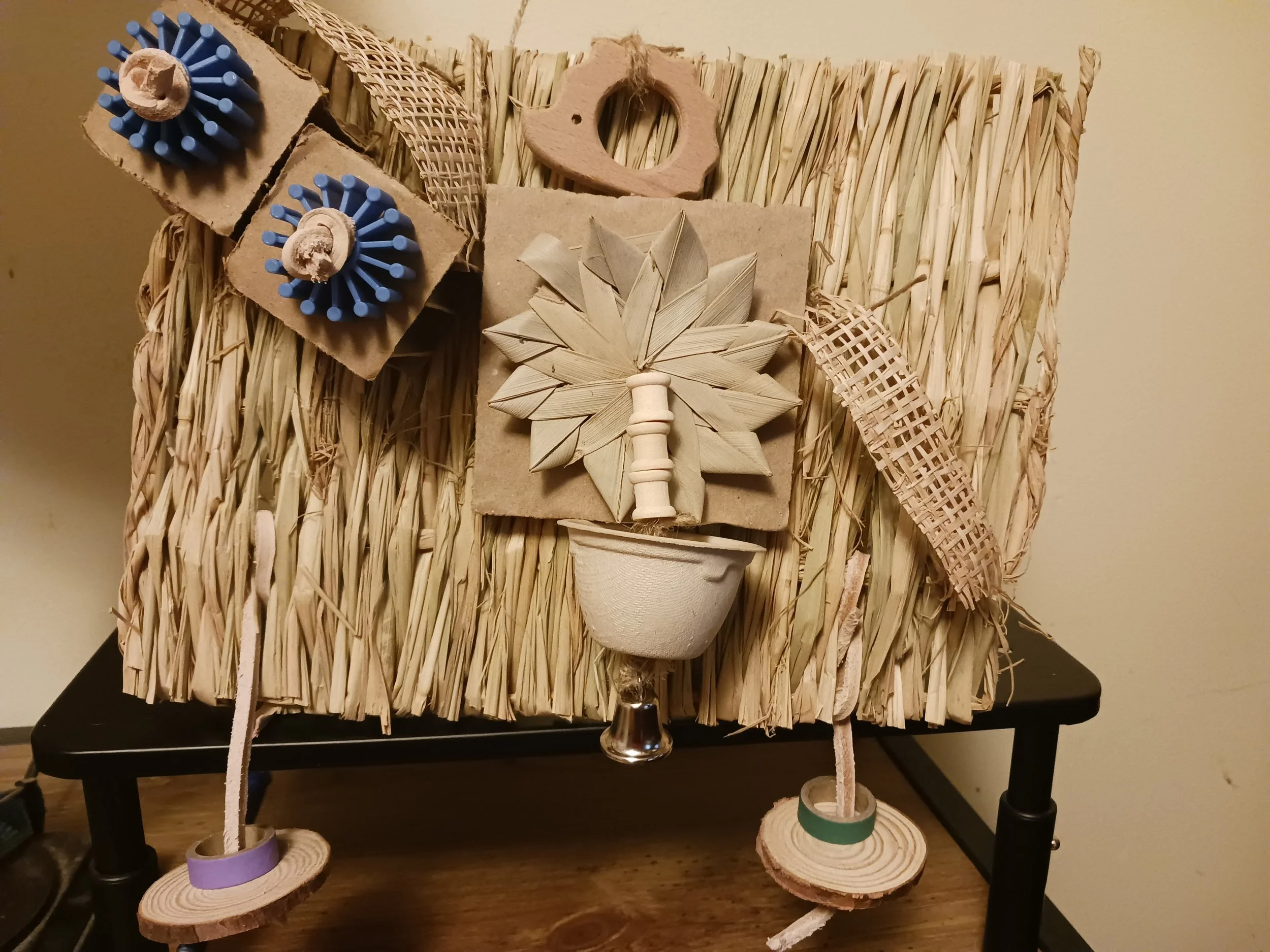
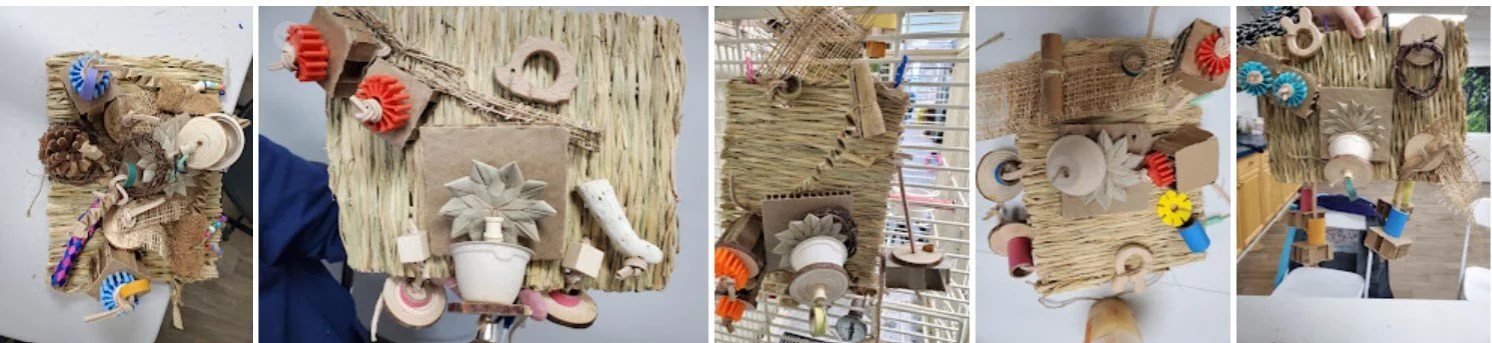
Rhode Island Parrot Rescue offers a wonderful opportunity to build enrichment for companion birds on Saturdays. In November, there was a fundraiser to build an “Abstract Horse” enrichment activity mat. What is an “Abstract Horse” enrichment activity mat? First off, this is a fun straw-safe mat with companion bird-toy parts in which small pieces of food can be hidden. The end goal of creating this mat is to place the mat in the companion bird’s cage and have the companion bird investigate and search for those yummy bits of food. The “Abstract Horse” is just what it is supposed to look like, but honestly, you could call it bird parts attached to a straw mat.
It is all about having fun for the individual and the companion bird.
The individuals who attended had a great time, and all enjoyed creating their “abstract horse” activity mat.
2025 Training Assistance Look Back:
Throughout the year, I assisted individuals in understanding the behavior of companion birds as part of the Humane Education & Training (Public Outreach) program. One of the primary behaviors discussed this year was biting. When the individual researched the behavior, asking AI for answers, there were a variety of responses, ranging from Attention and Hormonal to needing Protein (the companion bird is biting your skin for protein).
Remember that each companion bird is unique, and there isn't a one-size-fits-all answer. My goal is to help explain the environment and circumstances to someone who is investigating the biting behavior. Such as when your companion bird is biting, step back and re-evaluate the situation. When did the companion bird start biting? What were you asking the companion bird to do right before the biting behavior happened?
“Given a choice, most parrots show a preference for avoidance behavior rather than risking the danger of confrontation.
In the domestic setting, avoidance may not be possible for the bird, due to environmental confinement (e.g. cage or walls) or due to physical interventions (e.g. wing clipping, preventing a flight response), It may also be that a new situation is too intense or too sudden for the bird and it may bite without the owner observing any apparent warning signals. “1
The more we understand the behavior, the more we can understand the purpose. “Behavior may have History; History does not define the companion bird.” 2
The more we learn to step back and avoid pushing our own agenda or expectations onto our lovely bird, the better. Every training method should allow our feathered friends the freedom to choose and learn at their own pace, without any pressure. This approach helps create a trusting and positive bond between our companion bird and us.
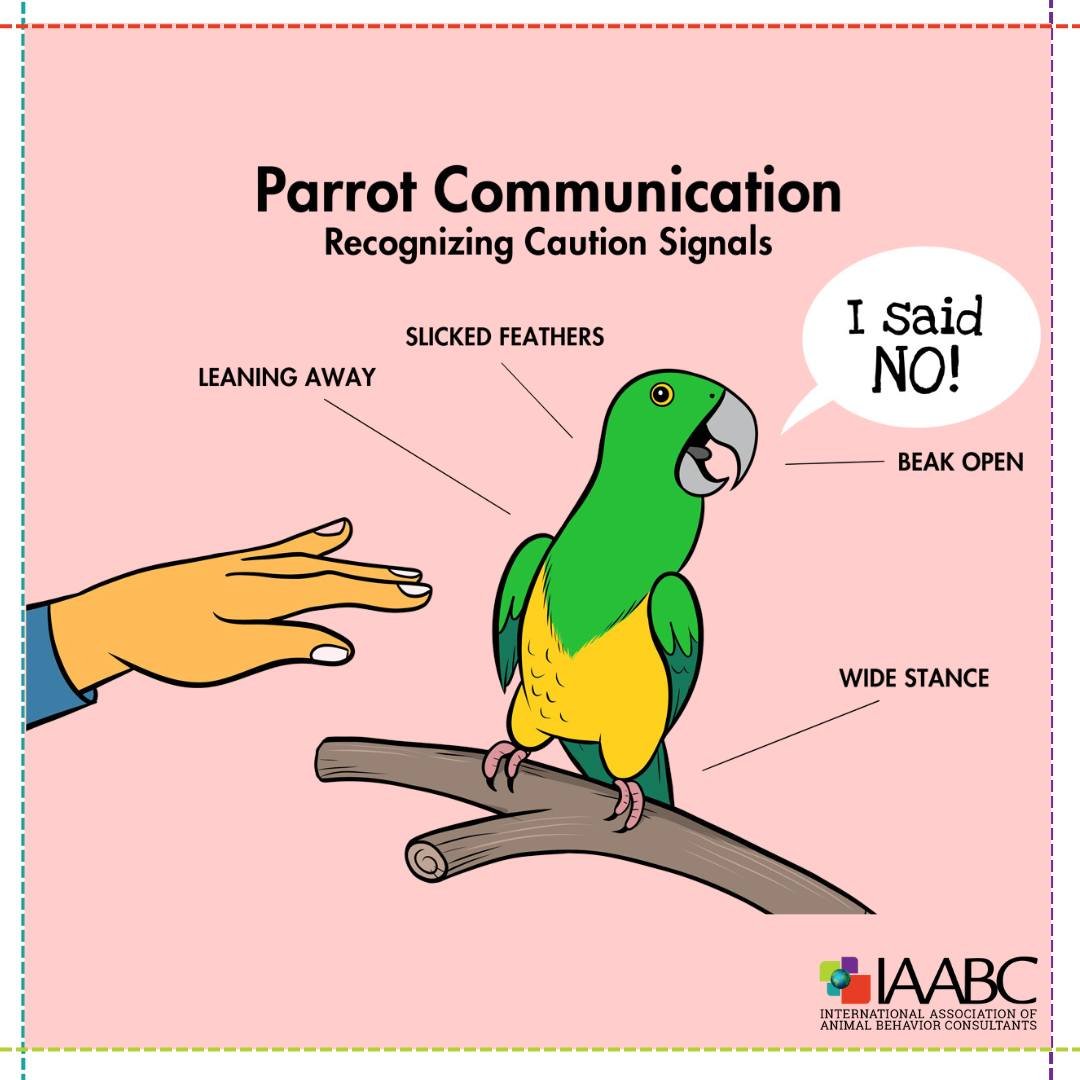
The IAABC (International Association of Animal Behavior Consultants) created a wonderful image called "Parrot Communication" that depicts uncomfortable, unclear, and the onset of a fear-response body language.
2025 Support Assistance Look Back:
In 2025, my services as a Companion Animal Hospice/End-of-Life Doula were needed. I was very grateful to be available to assist individuals in listening and finding a way to honor their companion bird(s). Every individual has different and wonderful ways to celebrate their companion bird's life:
Ribbons with photos and mementos hanging in a tree
Building a beautiful scrapbook
Life Celebration gathering/memorial with friends.
Planting a “living memorial” (tree, shrub, flower garden).
2026 New Year's Resolutions:
Rhode Island Parrot Rescue(RIPR) does amazing work. The staff and volunteers are dedicated to each individual companion bird and treat them with great care. As you think about your New Year’s Resolutions for your beloved bird, consider being open to making just one new change:
Start listening to companion animal educational podcasts, such as
Barbara Heidenreich – “YOU be the Behavior Consultant” - https://www.youtube.com/playlist?list=PL535EQukKq4pzGQXyMIwQpHfAJUjeTH-f
Lara Joseph – “The Enrichment Science Podcast” –https://www.youtube.com/@TheEnrichmentSciencePodcast
Start watching companion bird educational videos, such as
Phoenix Landing Foundations – Free educational sessions https://www.phoenixlanding.org/behavior_recordings.html
Parrot SOS – Free Educational Session -https://smartbeaks.parrotsos.com/BirdBasics
Begin learning to build enrichment
Attend RIPR Saturday in-person building enrichment
Phoenix Landing Foundation – Free foraging sessions
Fit for Foraging https://www.youtube.com/watch?v=kfHqr9ydkHg
What is Enrichment https://youtu.be/dAId8dWsvL8?si=azqfu0dV88sIfFHK
Asking for Assistance
Reaching out to a professional certified companion bird behavior trainer
Attending live online/in-person workshops
Update the companion bird’s enclosure
Changing the enclosure (even one small change); move a perch
Adding one new small toy
Trying new food in the food bowl
Please don't hesitate to reach out to me throughout the year to share your one new change and how it went. Sheila at trainer@ripredu.com.
Copyrighted. Blog posts may be used as guidelines for the proper care of your parrot. Not intended for medical or legal advice. Please consult with a licensed avian veterinarian regarding the medical care and wellbeing of your exotic pets.